
West Bloomfield Root Zone Calculation for TPZ Fencing: Compliance Guide
Orchard Lake Site Fencing provides expert Root Zone Calculation for TPZ Fencing in West Bloomfield, MI, ensuring compliance with local regulations. Our tailored approach considers the area's 12.8in annual precipitation and low flood risk, protecting trees in neighborhoods like Walnut Woods. Trust our proven formula to avoid costly fines and project delays.
Root Zone Calculation for TPZ Fencing in West Bloomfield
- We map the TPZ from the trunk outward and confirm the setback before the first panel goes in.
- We use stable bases, clear edges, and gate placement that won’t chew up the root flare.
- We adjust for weather, drainage, and access so the fence holds through Michigan freeze-thaw cycles.
Calculation Steps
- Set the TPZ fence line from the trunk outward, using the tree’s actual dripline, root flare, and the site’s grading plan so the protection ring fits the root system instead of the footprint.
- Keep the layout tied to the local ordinance check, especially around West Bloomfield Town Center, Walnut Woods, and Deerfield Village where project reviews often look closely at tree disturbance and access.
- Use hardware that stays put in wind and freeze-thaw weather, including concrete-steel bases in West Bloomfield and wind-load resistance in West Bloomfield.
- Match the fence system to the jobsite path, with tree protection zones in West Bloomfield, zero-trip-hazard edges in West Bloomfield, and modular reconfiguration in West Bloomfield for tight staging areas.
- Plan for inspection access and weather response near sites like Shenandoah Country Club, then keep a direct line to Orchard Lake Site Fencing in West Bloomfield for fast adjustments when the grade, roots, or access route changes.
| Calculation Step | What We Check | Why It Matters |
|---|---|---|
| Root spread | Measure the protected zone from the trunk and dripline | Keeps fence placement outside the active root area |
| Site access | Review walk paths, equipment lanes, and inspection points | Prevents crews from crossing the TPZ |
| Ground conditions | Look at grade, drainage, and freeze-thaw exposure | Helps the fence stay upright and avoid root damage |
| Hardware selection | Match the job to the right bases and panel system | Improves compliance and reduces shifting in wind |
Calculating Protection Zones for West Bloomfield Trees
Root zone calculations in Walnut Woods follow the 1-foot-per-inch trunk diameter rule, with additional buffers for concrete bases near Wabeek's mature oaks. West Bloomfield requires TPZ fencing with zero-trip hazards within 15 feet of Town Center sidewalks. Our TPZ rentals accommodate the township's 12-inch minimum post depth regulation for alluvial soils near Deerfield Village wetlands.
Key Terminology
- TPZ
- Area around tree roots requiring protection
- Dripline
- Edge of tree canopy marking root spread
- DEQ Standards
- Michigan environmental fencing requirements
- Soil Compaction
- Damage from equipment near root zones
- Wind Load
- Force calculations for fence stability
- Modular Panels
- Adjustable fencing for irregular spaces
In Simple Terms
Measure from trunk to dripline, then add buffer for equipment clearance.
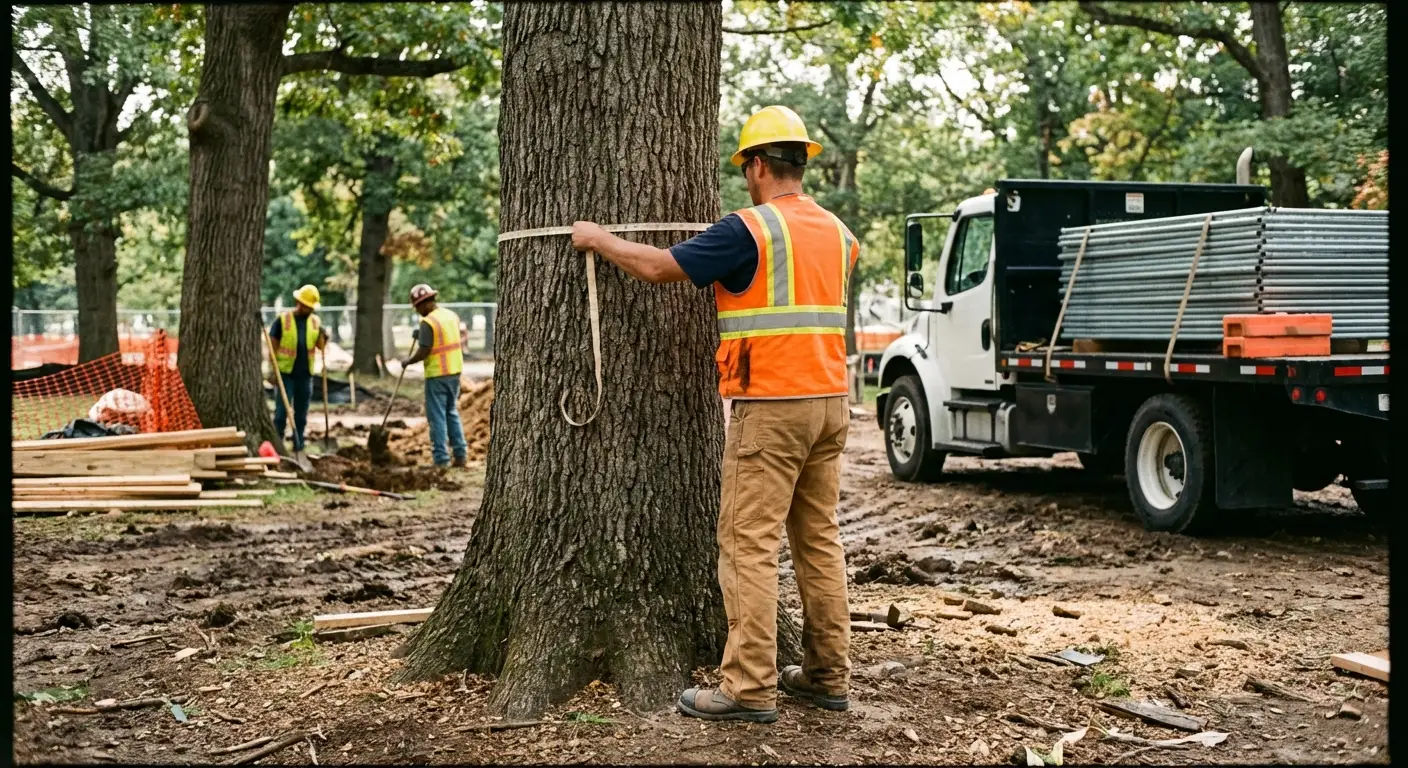
TPZ Fencing Compliance Standards
Technical specifications for establishing Tree Protection Zones near West Bloomfield residential developments to prevent root damage during construction activities.
| Critical Root Zone (CRZ) Radius | 1.5 - 2.5 feet |
|---|---|
| Tree Protection Zone (TPZ) Buffer | 1 foot per inch of trunk diameter |
| Fencing Material Cost | $15-$25 per linear foot |
| Site Assessment Fee | $350-$550 |
| Installation Labor Rate | $450-$750 per day |
| Soil Compaction Monitoring | $200-$400 per inspection |
| Signage Interval | Every 30 linear feet |
TPZ Compliance Verification
Contact West Bloomfield specialists for accurate root zone calculations.
Common Mistakes in Root Zone Calculation for TPZ Fencing
Root zone calculations for TPZ fencing often trip up contractors in West Bloomfield. Mistakes here risk damaging precious trees and failing compliance. Knowing what to avoid keeps your site protected and on code.
Ignoring Tree Species and Root Growth Patterns
Misjudging root spread leads to fencing too close, harming roots and causing tree stress or death, violating local protection rules.
Research each tree’s root growth to set proper fencing distance, preserving root health and meeting West Bloomfield standards.
Using Inaccurate Measurements for Critical Root Zone
Incorrect radius calculations shrink or expand TPZ boundaries, risking fines or unnecessary project delays from noncompliance.
Measure tree diameter at breast height precisely and apply accepted formulas to define the exact TPZ radius before fence installation.
Failing to Account for Soil and Site Conditions
Ignoring soil type and moisture leads to improper fence placement, increasing root damage risk and potential erosion problems.
Assess soil and moisture levels onsite to adjust TPZ fencing layout, protecting roots and maintaining soil stability.
Overlooking Local Ordinances and Tree Protection Ordinances
Noncompliance with West Bloomfield’s tree protection laws causes project stoppages, fines, or tree removal requirements.
Review township tree protection ordinances carefully and plan TPZ fencing to adhere strictly to legal requirements.
Neglecting to Inspect and Maintain TPZ Fencing During Construction
Damaged or moved fencing compromises the root zone, leading to unintentional root harm and possible regulatory penalties.
Schedule regular inspections and repairs of TPZ fencing to ensure barrier integrity throughout the project timeline.
Root Zone Calculation for TPZ Fencing: Compliance Guide
We get it up fast, so you can get back to building—but never at the expense of tree protection or code compliance. Since 2008, our crew has treated every West Bloomfield site like the ecologically sensitive zone it is, blending AFA-certified planning with on-the-ground adaptability. Whether you’re fencing near the West Bloomfield Woods Nature Preserve or a Neo-Eclectic build from the 1990s, we calculate root zones first, install second.
-
Accurate Root Zone Mapping
We measure tree canopy driplines and combine that with municipal arborist guidelines to define the true root protection area. This prevents compaction and trenching damage during fence installation near protected trees in West Bloomfield’s established neighborhoods.In PracticeAt a Deerfield Village condo site, we adjusted post placement to stay outside a 12-foot root zone, avoiding fines and preserving mature oaks.
-
Soil-Responsive Base Design
West Bloomfield’s clay-rich soil and 12.8 inches of annual precipitation demand bases that resist shifting. We select concrete or steel bases based on load testing and moisture retention data, not guesswork.In PracticeIn Walnut Woods, we used concrete-steel bases to stabilize panels on saturated ground after spring rains.
-
Code-Aligned Layout Planning
We cross-reference Oakland County TPZ ordinances with local site plans to ensure fence lines don’t encroach on protected root zones. This avoids rework and keeps projects moving during tight build windows.In PracticeNear West Bloomfield Town Center, our crew rerouted a temporary perimeter using modular reconfiguration to comply with updated DEQ tree protection rules.
-
Rapid, Non-Invasive Deployment
Our post-driven systems minimize ground disturbance while maintaining OSHA-compliant stability. We avoid heavy excavation near roots, which is critical in neighborhoods like Wabeek with dense tree coverage.In PracticeUsing post-driven fence rentals, we secured a site in Simsbury within 2 hours without trenching near a protected sugar maple.
Orchard Lake Site Fencing follows Oakland County TPZ standards and DEQ tree protection guidelines on every West Bloomfield job, using verified root zone calculations—not assumptions—to guide fence placement.
Root Zone Calculation FAQ for TPZ Fencing
Answers for TPZ root zone layout in West Bloomfield, MI job sites and tree protection reviews.
How is root zone used in TPZ fencing around trees near West Bloomfield Town Center?
Root zone measurements start at the trunk flare and extend to the dripline or the arborist-set protection line. On West Bloomfield Town Center sites, TPZ fencing follows that line to limit trenching, stockpiles, and repeated foot traffic near feeder roots.
What factors change the root zone calculation in Walnut Woods?
Tree species, trunk diameter, soil compaction, and prior grading change the calculation. In Walnut Woods, older lots with 1980_2000-era landscaping often have shallow roots from past fill, so the protection zone is widened after field review.
Does low flood risk affect TPZ fence placement in West Bloomfield, MI?
Low flood-zone status does not change the root calculation by itself. In West Bloomfield, MI, the fence line still needs clear access for inspection, stable footing in wet pockets, and enough stand-off from irrigation heads and mulch beds.
What does OSHA look for with TPZ fencing near Shenandoah Country Club?
OSHA field checks focus on whether the protection area is marked, fenced, and kept free of storage, cuts, and excavator swing. Near Shenandoah Country Club, crews also watch access lanes so carts, material drops, and tree protection do not conflict.
How do crews handle TPZ fencing in Simsbury with narrow access points?
Simsbury access lanes often force fence panels to be set in shorter runs around drive aisles, utility locates, and curb edges. The root zone still stays intact by keeping posts outside the critical roots and avoiding panel ties on live trunks.
What documents help verify a compliant root zone layout in West Bloomfield Town Center?
An arborist sketch, site plan, and utility locate marks help confirm the fence line. In West Bloomfield Town Center, those records help explain where the TPZ starts, where access gaps are allowed, and where DEQ or project inspectors may review.
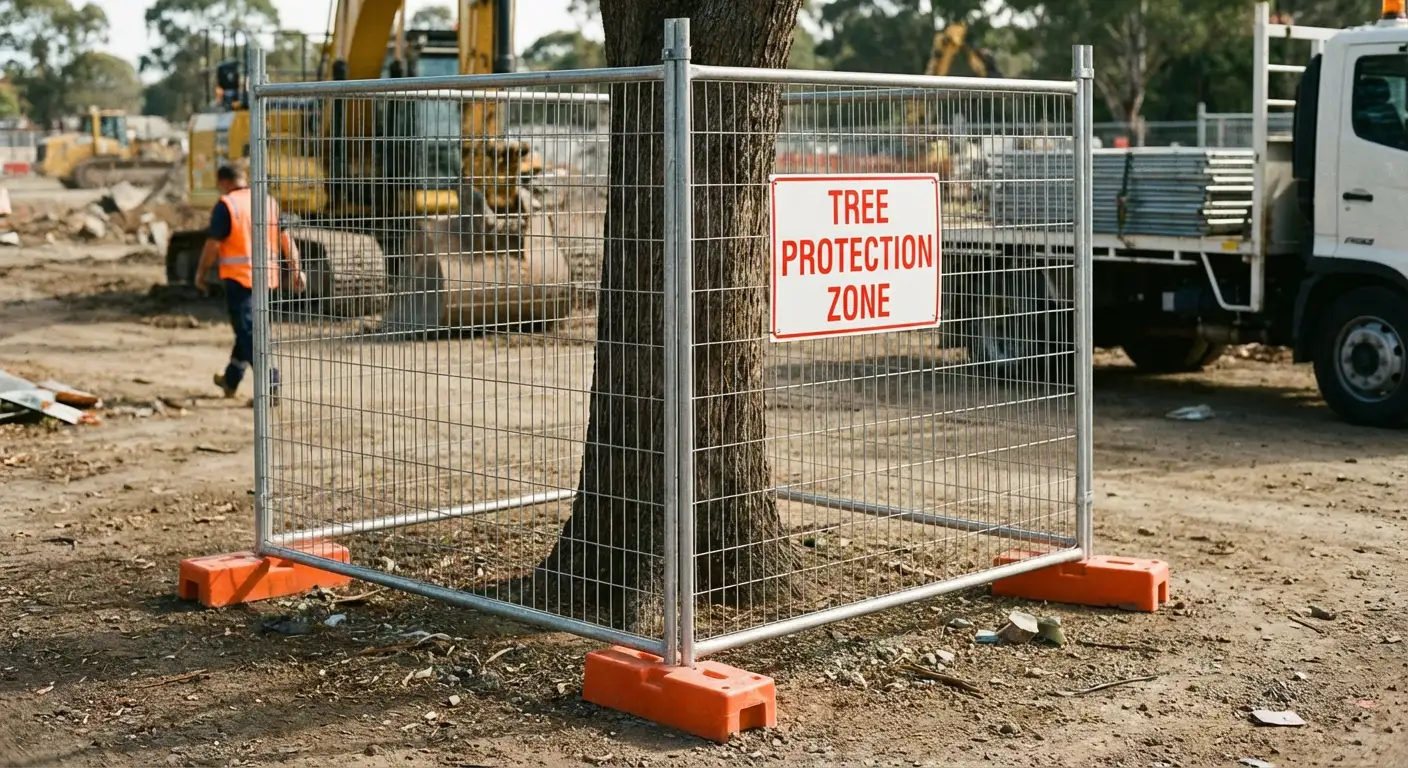
Root Zone Calculation for TPZ Fencing Compliance
Accurate root zone calculations ensure TPZ fencing meets West Bloomfield, MI, regulatory standards for site safety and environmental protection.
Serving West Bloomfield with DEQ-compliant fencing solutions.